Introduction
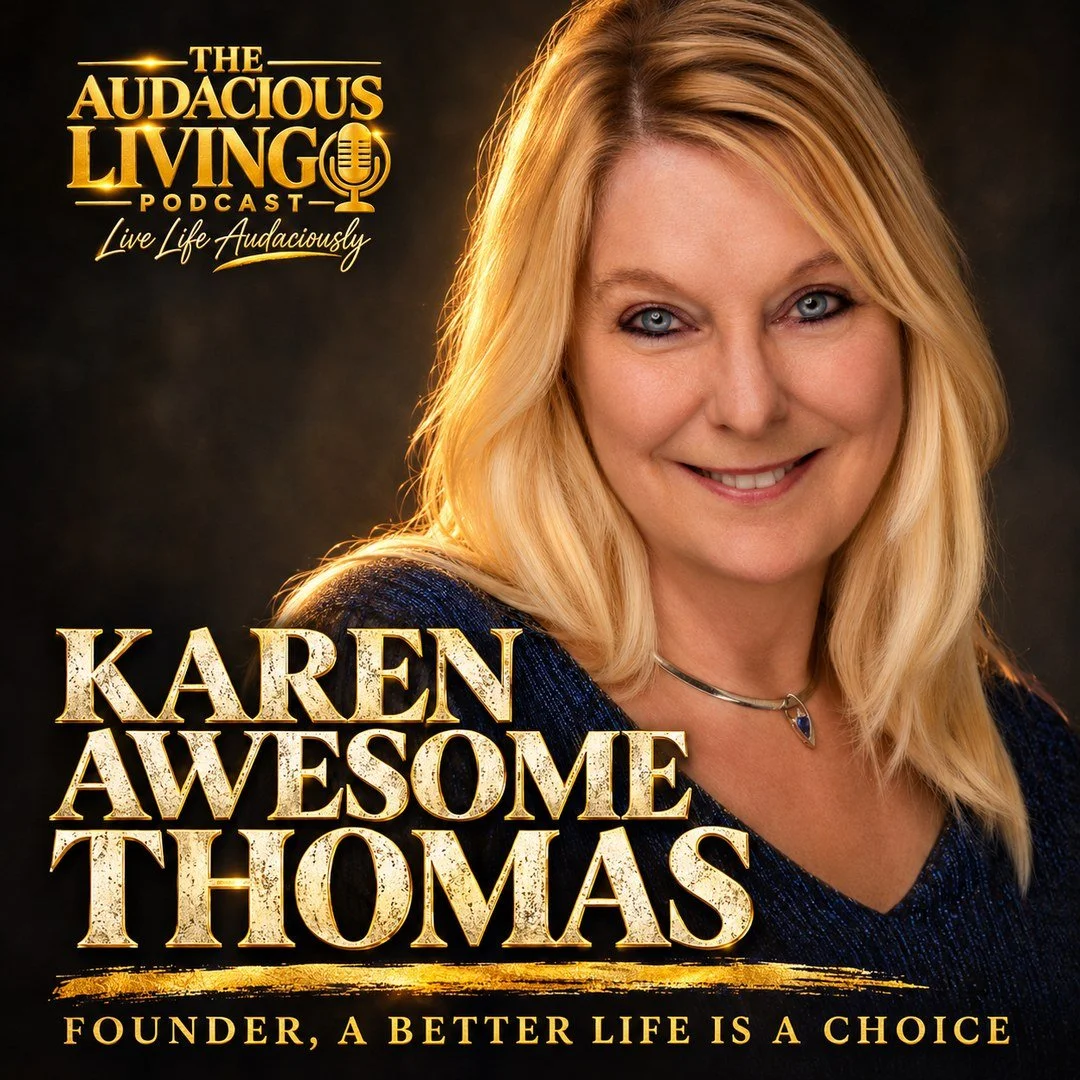
Karen Awesome Thomas lost her job four months after her daughter was born, and the job carried the health insurance her medically fragile newborn depended on. The family sold their house and lived with other people while she worked out how to earn from home. Forty-five years later, having built a business to a hundred and fifty thousand dollars a year, shut it down to sit beside a hospital bed, and rebuilt it again, she still insists on the same sentence: stuck is a choice.
Why This Conversation Matters
Most people describe being stuck as something that happened to them. Karen describes it as something maintained, day by day, by fear, inherited programming, and unexamined self-talk. That distinction matters because each of those three can be reprogrammed. Her life is the long evidence: a corporate administrative assistant who never planned to be an entrepreneur, a mother who rebuilt an income every time life knocked it down, and a woman now pushing seventy who teaches what she calls the second adulthood.
Stuck Is a Choice
Her company is called A Better Life Is a Choice, and the name is the whole argument. Every day, she says, we make choices that either empower our health, our wealth, and our happiness, or choices to just exist in the past. The circumstances are real. The medical bills were real, the layoff was real, the house really was sold. What she refuses is the conclusion that circumstances get the final word. There is always a way to make money, always a next step, always something a person can do from exactly where they are.
Fear Is Taught, and It Can Be Untaught
Ask Karen what holds people back and the answer comes in one word: fear. We are taught to fear everything, she says, and school starts the teaching early by treating failure as proof that a person is bad or not smart. Successful people fail more times than they succeed, but nobody teaches failure as part of the learning process. So adults stay hostage to a doctrine they absorbed as children, and call it their personality.
The Programming You Never Chose
Karen tells the story of the roast: a daughter asks why her mother cuts the ends off every roast, the mother asks her own mother, and the answer is that the grandmother only ever had one small pot. Three generations cooked around a limitation that stopped existing decades earlier. Our money ceiling works the same way, settling near what our parents earned, defended by habits we never chose and sentences we repeat without hearing them. Ninety-five percent of what we do is habit, she points out. The question is whether the habits serve us.
You Do Not Have to Entertain a Thought
Her practical tool is self-talk. People believe their thoughts are who they are, Karen says, and they are not. A thought arrives, and it can be received or released. Her own practice is disarmingly simple: if a thought does not make her happy, she treats it as untrue, thanks it, and lets it go. The subconscious, she argues, does exactly what it is told, which is why the sentences we say about money, lateness, and ability matter so much. Change the words and the programming starts to change with them.
Growth Only Happens in the Challenges
Late in the conversation she tells the farmer’s story: the stolen stallion, the son’s broken leg, the army that passed the house by, and through every turn the same response, it just is, not good, not bad. Her conclusion is that nothing is permanent and growth only happens in the challenges, never in the easy stretches. A challenge, in her framing, is not an interruption of the good life. It is the doorway to the next level of it.
We are taught that if we fail, we’re bad. But if you look at any of your major, major, major successful people, they have failed more times than they have been successful. But they don’t teach us that failure is a part of the learning process. And if I counted how many times I failed, if shutting down my business when my daughter was sick could have been labeled as a failure, I never counted as that. That’s just what a mother does. And you rebuild, you restart over, you redo.
— Karen Awesome Thomas
Lessons for Living Audaciously
Choose the empowering sentence. Every day presents the same fork Karen describes: empower your future or exist in your past. Name the choice out loud.
Treat failure as tuition. The people who succeed have failed more than they have succeeded. A shutdown, a layoff, a lost season is data, not a verdict.
Fire the old programming. Ask where a belief came from before you obey it. If it came from a pot that no longer exists, it does not get to run your kitchen.
Thank a thought and let it go. You are not your thoughts. Release the ones that do not serve you and replace one money sentence at a time.
Thank the challenge. Growth only happens there. Ask who you get to become on the other side of it.
Conclusion and Call to Action
Karen Awesome Thomas is not selling the idea that life is easy. She lost the job, sold the house, and closed a six-figure business to care for her daughter, and she rebuilt every single time. Her claim is narrower and stronger: stuck is not a place life puts you. It is a choice you can stop making. Pick one sentence you say about yourself this week and change it. That is where a better life starts.
Hear the full conversation: A Better Life Is a Choice: Karen Awesome Thomas on Resilience, Money, and Never Being Stuck