
Breaking Free from Shame and Self-Sabotage
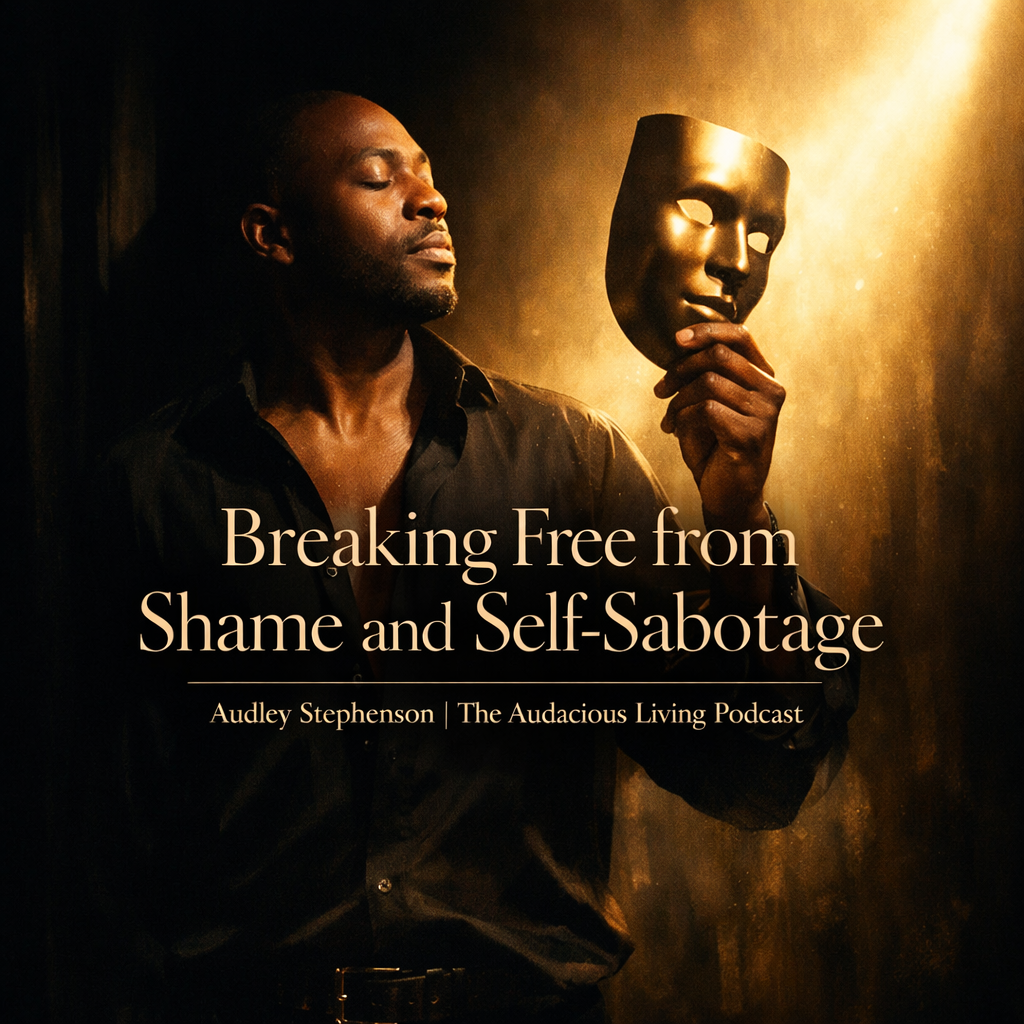
Why toxic shame may be the hidden reason so many people stay stuck
There are some conversations that challenge the way you think. And then there are conversations that challenge the way you see yourself.
That’s what this episode of The Audacious Living Podcast with Audley Stephenson does. In this conversation, Emma Lyons offers a bold and thought-provoking perspective on shame, arguing that it is not a healthy emotion, not a tool for growth, and not a sign that you care. Instead, she makes the case that shame is one of the most damaging internal forces many of us carry. You can listen to the full episode here.
Why This Topic Matters
A lot of people live with self-doubt, procrastination, perfectionism, people-pleasing, and fear of being seen. Usually, we treat those things like separate issues. We work on confidence. We try to improve discipline. We tell ourselves to think more positively.
But what if those aren’t the root issue?
Emma’s perspective is that toxic shame is often underneath all of it. Shame tells people they are not enough. It convinces them to shrink, hide, second-guess themselves, and disconnect from who they really are. And the dangerous part is that many of us have been taught to believe that shame is useful. We think it keeps us accountable. We think it keeps us humble. We think it makes us better.
But if shame only keeps us small, then it’s not helping us grow. It’s blocking us from becoming who we were meant to be.
Insights from the Conversation
One of the biggest insights from this conversation is the distinction between guilt and shame.
That difference matters.
Guilt says, “I did something wrong.” Shame says, “There is something wrong with me.” That shift is enormous, because once behavior becomes identity, it becomes much harder to move forward. Instead of learning from mistakes, people start defining themselves by them.
Another major insight is Emma’s argument that shame is the opposite of authenticity. If shame tells you to hide, perform, and wear a mask, then it becomes impossible to show up fully as yourself. That means shame doesn’t just affect your self-esteem. It affects your relationships, your leadership, your voice, and your ability to live boldly.
Emma also introduced a practical framework called B.R.E.A.K. to help people disrupt shame in real time. The method begins with breaking the trance, refusing to engage with the inner attack, exposing the lie, anchoring in truth, and kicking the shame out. Whether someone agrees with every part of her framework or not, what stands out is the invitation to stop automatically believing the voice that tears you down.
““Shame is the opposite of authenticity.””
Lessons for Living Audaciously
Living audaciously requires honesty.
Not performative honesty. Real honesty.
It requires being willing to ask whether the voice inside you is actually helping you, or whether it has been keeping you trapped. It means recognizing that self-criticism is not always wisdom. Sometimes it’s conditioning. Sometimes it’s fear wearing the mask of discipline. Sometimes it’s shame pretending to protect you.
This conversation also reminds us that audacity is not always loud. Sometimes audacity is refusing to keep shrinking. Sometimes it is rejecting the lie that you have to earn your worth. Sometimes it is choosing to show up as yourself without apologizing for taking up space.
That kind of inner work affects everything. It affects how you lead. It affects how you love. It affects how you recover from setbacks. It affects whether you keep hiding or finally let your real voice come through.
Emma Lyons, through her platform Trauma Matrix, focuses much of her work on helping people dismantle shame and reconnect with authenticity through her writing and programs.
Closing Reflection
The truth is, a lot of people are not held back by lack of talent. They’re held back by the story shame keeps telling them about who they are.
And maybe the audacious move is to stop listening.
