
Undefeated: The Quiet Audacity of Trusting Your Own Track Record
Introduction
The future has a strange way of making us forget our own history.
Put a new opportunity, difficult decision or uncertain season in front of us and suddenly the mind starts producing questions. What if I make the wrong move? What if this hurts more than I expect? What if I cannot handle what comes next?
Those questions can feel convincing because the future is unwritten. There is no evidence from tomorrow yet. There is, however, evidence behind us.
That is what makes one observation from Eric Robinson so powerful. His point is not that difficult things stop being difficult. It is that we routinely underestimate our ability to adjust after they happen. We fear the next hard thing while overlooking the long record of hard things we have already survived.
Sometimes courage is not found by imagining ourselves becoming stronger. Sometimes it begins by remembering that we already have proof.
Why This Post Matters
We tend to treat resilience as though it belongs to a certain kind of person. The strong one. The fearless one. The person who seems naturally equipped to deal with pressure.
That can make resilience feel like a personality trait you either possess or you do not.
Yet our own lives tell a different story. Most of us have already moved through disappointment, uncertainty, loss, mistakes, changing relationships, career turns and moments when the plan we trusted stopped working. We may not have handled every moment perfectly. We may carry scars from some of them. Still, we adjusted enough to keep moving.
That distinction matters because the next audacious decision rarely arrives with certainty attached. If we require certainty before acting, we can spend years waiting for a feeling the future cannot provide.
Your past cannot guarantee an outcome. It can, however, give you evidence about your capacity.
Your Past Is Evidence
Eric Robinson knows something about entering unfamiliar territory. Before spending 24 years with the FBI, he was a pastor. When he considered the career change, he had never handled a gun and had never conducted an investigation. On paper, the transition could have looked wildly mismatched.
He took the step anyway.
Once inside the FBI, something changed. The institution that had looked almost larger than life became human. He met talented people and realized that he could belong among them. Training gave him competence. Experience gave him perspective. Over time, unfamiliar territory became part of his own track record.
That is easy to miss when we look backward. Once we have survived something, the mind has a habit of shrinking the uncertainty that existed before it. We remember the outcome and forget how unsure we once felt.
Look carefully at your own history and you may find decisions you once thought were enormous that now feel ordinary. Conversations you dreaded happened. Transitions you could not picture became your life. Problems you thought might overwhelm you eventually became stories you can tell.
The evidence was being collected even when you did not realize you were collecting it.
Undefeated Does Not Mean Unhurt
The word undefeated can sound triumphant, almost as though resilience means walking through life untouched. That is not what makes the idea useful.
Eric Robinson framed it with more nuance:
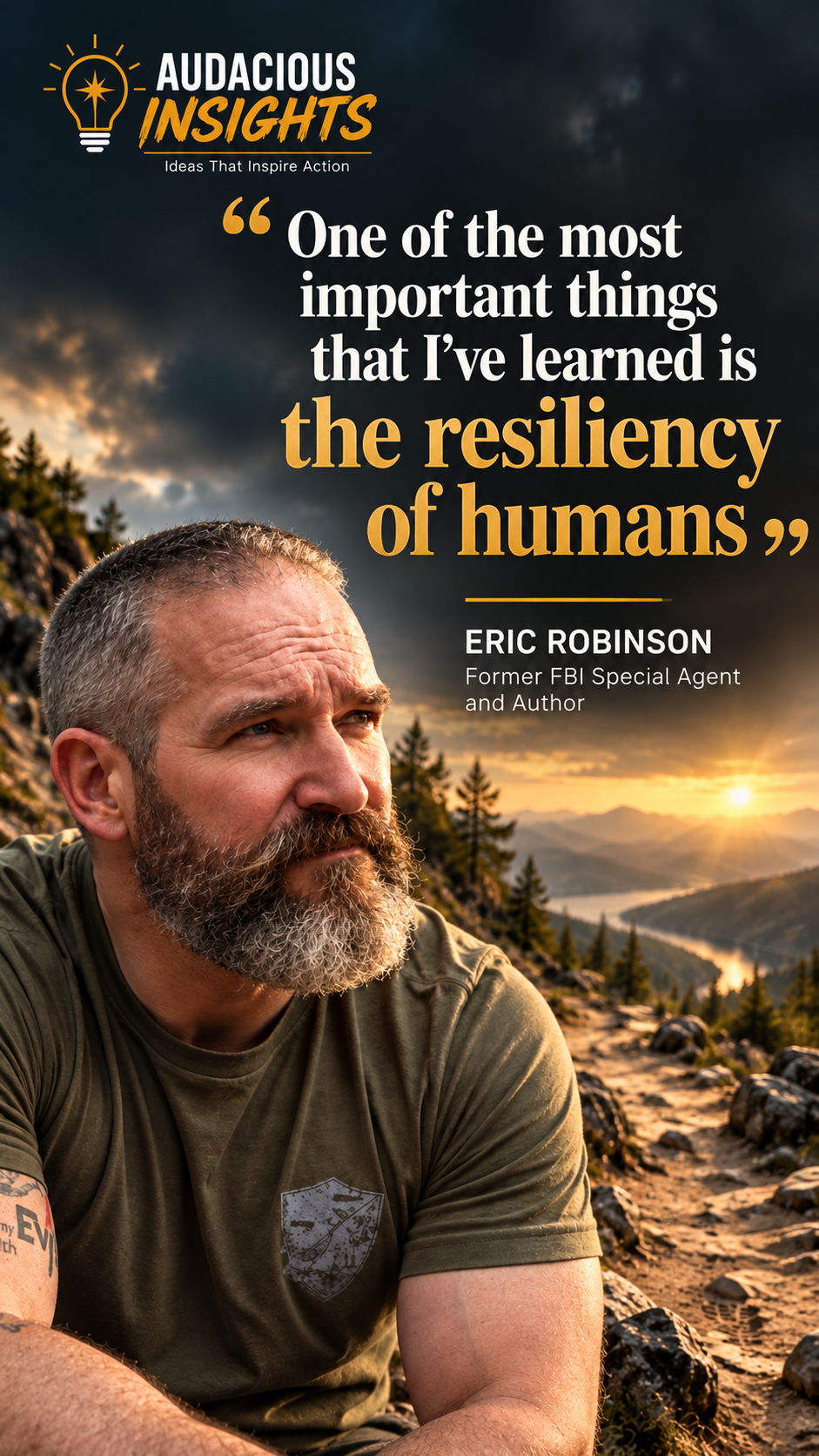
“One of the most important things that I've learned is the resiliency of humans that we fear what's in the future and the mistakes that we'll make and how they'll affect us, even even the harms that actually will come and will be there, we fear how that will impact us more than it will, and even if it impacts us harder than we think. We don't recognize our ability to adjust our lives and to change. I am through everything I've experienced undefeated, everything that's come at me, I have gotten past. And you can say the same thing, everyone can. Whatever has come you have conquered it, yes, and your life has changed. It's nuanced. It's it's different. Sure, you even even combat veterans. You lose limbs, terrible tragedy, and your life changes. You are now this person, and you still have joy in different ways.”
— Eric Robinson
Former FBI Special Agent and Author
The important word there may be changed.
Getting through something does not mean returning to exactly who you were before it happened. Some experiences alter us. Some cost us something. Some require us to build a life that looks different from the one we expected.
Resilience is not proof that nothing can hurt you. It is evidence that being affected and being defeated are not necessarily the same thing.
Confidence Has Receipts
Later in the conversation, Eric Robinson connected courage to clarity, experience and knowing that you are capable. That idea fits neatly beside his definition of being undefeated.
Confidence does not always have to be a pep talk. It can be an audit.
Instead of asking only, “Do I feel confident about what comes next?” try looking backward. Where have you adapted before? When did you learn something you did not know how to do? Which difficult season forced you to discover a capacity you had not needed before?
This is not about pretending the next challenge will be easy because the last one did not destroy you. Different circumstances demand different things. Past survival does not make anyone invincible.
It does challenge the assumption that fear gets to present itself as the only credible evidence in the room.
If fear can point to everything that might go wrong, your history is allowed to point to everything you have already figured out.
The Future Does Not Owe You Certainty
One of the hardest parts of living audaciously is accepting that certainty usually arrives late.
We want the guarantee before the decision. We want to know the move will work before we make it. We want confidence to show up before action rather than recognizing that confidence is often built through action.
Eric Robinson did not enter the FBI with a lifetime of law-enforcement experience behind him. He entered with enough belief to take the first step and enough willingness to learn what came next.
That is a more practical model of courage than fearlessness. You do not need to know that everything will work. You need an honest understanding of what you know, what you can learn and what your own history says about your ability to adapt.
There is quiet audacity in that. No grand performance. No pretending. Just a willingness to stop treating uncertainty as evidence of incapacity.
Lessons for Living Life Audaciously
Living audaciously does not require you to convince yourself that nothing bad will happen. It asks something more grounded: do not erase your own evidence when deciding what you are capable of doing next.
Before the next difficult decision, take inventory. Not only of your wins, but of the moments that did not go according to plan and still taught you how to continue. Remember the times you adjusted. Remember what you learned after being wrong. Remember the situations that once felt impossible to navigate and eventually became part of your experience.
Your track record does not promise that the next chapter will be painless. It tells you that the person arriving at that chapter is not starting from zero.
You have history. You have lessons. You have evidence.
The next audacious leap may still make you nervous. Perhaps the better question is not whether you can eliminate that uncertainty, but whether you are willing to let your own track record have a voice in what you do next.
