
Introduction
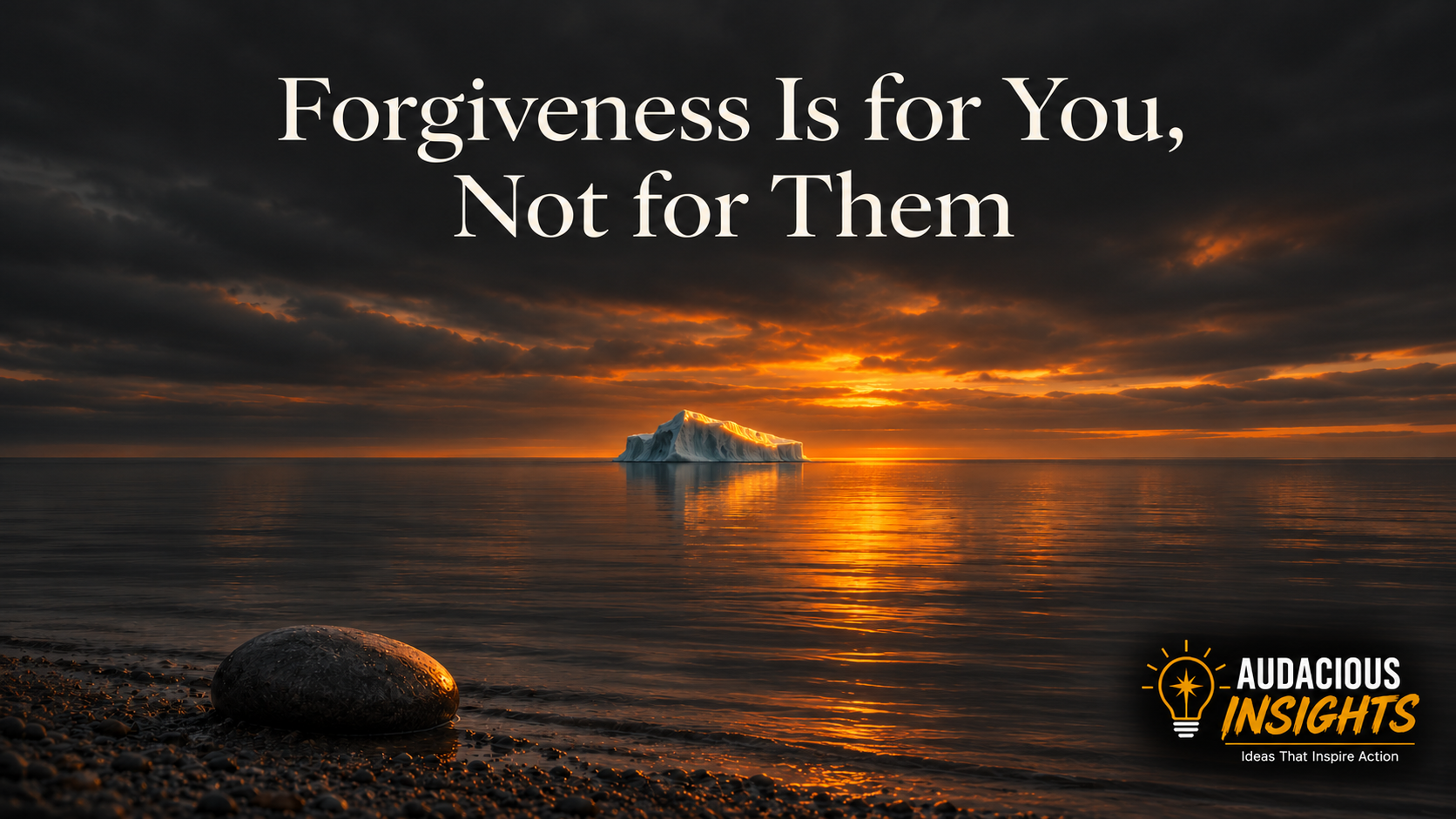
She was six years old, and she could already feel what she could not yet name. Her mother was drifting, like an iceberg afloat by herself, and the little girl watching her understood something before she had any words for it. The woman in front of her was doing her best with tools she did not have. That understanding, quiet and wordless, was where forgiveness began for Sandra McQuade.
Most of us think of forgive⁶ness as a decision we make as adults, after long thought, usually after someone apologizes. Sandra's story turns that idea around. Forgiveness arrived first as a feeling, in a child who could sense her mother's pain. The decision came later, and it kept coming, for years, in small acts of understanding that eventually let her put something heavy down.
Why This Conversation Matters
Sandra McQuade is the first author in The Audacity to Forgive, a series of conversations with the fifteen authors of When We Forgive, an anthology about the hardest stories people carry. Her story, The Widow, is about her mother, a woman who lost her husband young, struggled with alcohol, and was called the widow by people who preyed on her vulnerability. It is the first thing Sandra ever wrote.
That matters because forgiveness is one of the most misunderstood ideas in our lives. We treat it as something we give to someone else, a gift that lets them off the hook. Sandra's life says something different. Forgiveness was never really about the other person. It was about what she was carrying, and what happened when she finally set it down.
Forgiveness Is Not an Invitation to Keep Enduring Harm
The question people ask Sandra most often is the one she asked herself: could you forgive this? Her answer has stayed with me because it refuses the easy version of the story. Forgiveness, she says, is not an invitation to keep the same behavior, or to put up with the same behavior. You can forgive someone and never tell them. You can forgive someone who is no longer here. Forgiveness does not require a restored relationship, and it does not erase consequences.
That distinction matters more than it sounds. Reconciling is something two people do together. Forgiving is something one person does, alone, for their own freedom. When we confuse the two, we trap ourselves. We either refuse to forgive because we do not want the relationship back, or we force a reconciliation we do not want because we think forgiveness demands it. Sandra separates them cleanly, and the separation is the whole point.
“Forgiveness isn’t about still putting up with things that hurt you. Forgiveness is for you and you don’t have to keep going with the behavior. So forgiveness doesn’t take away the consequences. There’s still consequences.”
Read that again slowly. The sentence that carries the whole idea is the short one in the middle: forgiveness is for you. Not for them. For you. The rest follows from it. If forgiveness belongs to the forgiver, then it stops being a favor you do for someone who hurt you, and it becomes a choice you make about what you will keep carrying.
Look at Who They Were Then
Sandra learned to ask a question most of us skip. When someone hurts us, we usually ask what they did. She learned to ask who they were when they did it. Her mother did not start out wishing for the life she ended up living. She was a young widow with two small children, no support, and struggles she could not manage. Looking at her that way did not excuse anything. It made understanding possible, and understanding made forgiveness possible.
That lens changed everything for Sandra, because it pointed her toward a harder truth. Her mother spent her lifetime not forgiving Sandra's father. She stayed angry, stayed wishing things had gone differently, and all that effort ended up for naught. The anger kept her stuck, and it leaked into every relationship around her. Watching that happen taught Sandra what unforgiveness costs, long before she had a name for it.
Becoming a mother herself gave Sandra the other side of the picture. She could feel sorry for herself and for the way things went, and she could also see how easily a person makes mistakes with the best intentions. She did the best she could with what she knew, and she could see her mother had done the same. That is not a small realization. It is the difference between judging someone and understanding them.
Resentment Is a Stop Sign
For Sandra, resentment is a stop sign. You cannot grow while you are hanging on to it. It keeps you stuck in the mud, and the heavy, angry feelings you drag around do not stay in one part of your life. They leech into other parts, into other relationships, into the way you see yourself.
Carried long enough, resentment stops being something you feel and starts becoming something you are known for. You become the person who flares up whenever a certain name comes up, the one whose grudge arrives in the room before they do. You lose a part of yourself to something you never chose to keep.
Sandra offers a gentler way to see the trigger itself. When something sets you off, that reaction is information. It is another opportunity to heal something, a sign pointing at what still needs your attention. The trigger is not proof you have failed. It is the work, showing itself to you.
The Lighter Feeling
Ask Sandra for her biggest takeaway and she does not hesitate. It is the lighter feeling, the peace that comes with putting something heavy down and moving forward. Let that part rest, she says. You cannot always let things go completely, but you can stop letting them make your decisions and spoil what is good.
Self-forgiveness, she says, is often the harder work. We are hard on ourselves in ways we would never be hard on anyone else, and we rarely stop to ask whether the consequences we imagine we caused actually happened the way we think they did. Having compassion for yourself, looking at yourself the way you would look at another person, is where the lighter feeling starts.
Journaling gave Sandra a safe place to do that work. A journal does not argue back. You can dump everything on the page, see the patterns, and be kinder and gentler with yourself than your own thoughts usually allow. Writing her story down made it real in a way thinking never had. The truth, once it was on the page, became something she could finally put down.
Lessons for Living Audaciously
Forgiveness belongs to the forgiver. It is not a favor you do for someone who hurt you. It is a decision about what you will keep carrying, and it is yours to make whether the other person knows or not.
Understanding comes before forgiving. Ask who someone was when they did what they did. That question does not excuse harm, but it opens the door to compassion, and compassion is what makes forgiveness possible.
Resentment is a stop sign, not a home. It keeps you stuck, and it spreads. Notice where it shows up, and treat the trigger as information about what still needs healing.
Self-forgiveness is the harder work. You did the best you could with what you knew. Look at yourself with the same understanding you would offer someone else, and give yourself the same permission to put something heavy down.
Conclusion and Call to Action
Sandra's mother died at 63, with her family all there. There was no settling of old scores in that room, no final argument about what should have been different. There was still love at the end. That is the image I keep coming back to, because it holds the whole idea in one frame. Love was still there, underneath everything that had gone wrong, waiting for someone to choose it.
You do not need a dramatic moment to start. You need one honest look at what you are carrying, and one small decision to set some of it down. Let that part rest. See what the lighter feeling makes possible.
