
Why Storytelling Might Be the Most Powerful Technology We Have
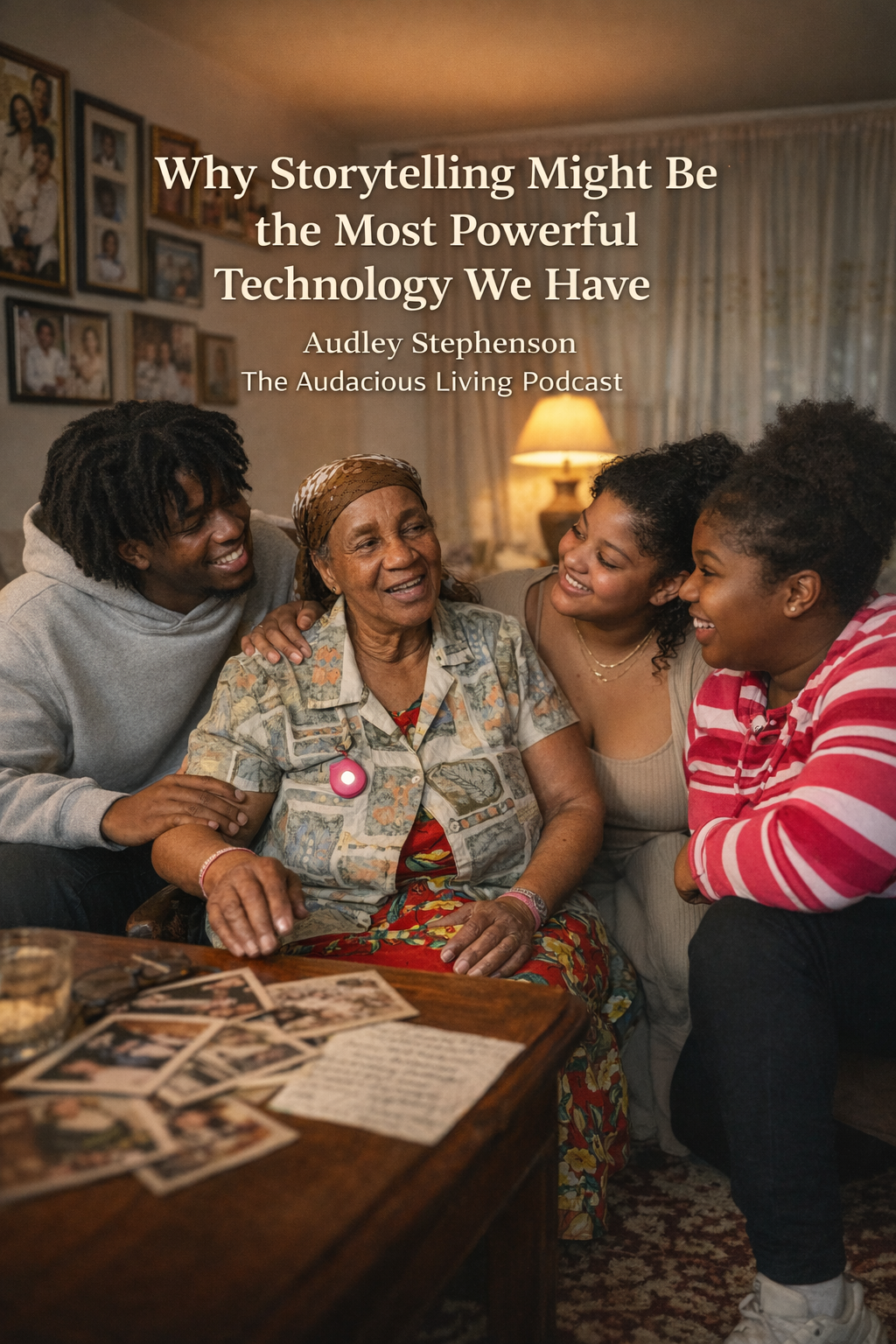
How storytelling shapes identity, deepens human connection, and helps us create meaning that can outlive us.
Storytelling is often treated like a soft skill, a creative exercise, or something meant mainly for books, films, and entertainment. But in my conversation with Cristian Cibils Bernardes on The Audacious Living Podcast, it became clear that storytelling is much more than that. It may actually be one of the most powerful technologies we have ever possessed.
Cristian, founder of Autograph.ai, is building something that sits at the intersection of artificial intelligence, legacy, memory, and meaning. At the heart of his work is a bold idea: what if technology could help families preserve not just information, but essence? Not just facts, but voice, memory, wisdom, and lived experience? That question opens the door to something deeper. It reminds us that before any machine, app, or algorithm came along, human beings were already using story to make sense of life.
Why This Topic Matters
We live in a world overflowing with information, but starving for meaning. We can instantly access music, videos, articles, and answers, yet many people still feel disconnected from themselves, from each other, and from the stories that shaped them.
That is where storytelling becomes so important.
Stories help us understand who we are. They help us make sense of our pain, our choices, our relationships, and our growth. They connect generations. They preserve culture. They turn memory into wisdom. They also help us reinterpret our lives, especially the moments that once felt confusing, painful, or unfinished.
Cristian put it beautifully throughout our conversation. He described storytelling not just as communication, but as identity itself. The stories we tell ourselves shape how we see the past, how we understand the present, and how we imagine the future. That means storytelling is not passive. It is active. It is formative. It is powerful.
Insights from the Conversation
One of the strongest ideas Cristian shared is that we are constantly living inside story, whether we realize it or not. We are not just observers of our lives. We are participants. In his words, we are not only the protagonist of our story, but also the author, editor, and publisher. That shift in perspective is powerful because it reminds us that meaning is not fixed. We have some agency in how we interpret our experiences.
That leads to the second major insight: storytelling is deeply connected to personal growth. Sometimes a painful event feels tragic in the moment, but years later, it becomes the turning point that shaped our strength, direction, or purpose. Story gives us distance. It helps us revisit life with greater compassion and clarity. That is where healing and self-awareness often begin.
A third insight from this conversation is that technology, when used well, can support humanity instead of replacing it. Cristian’s work with Autograph.ai is not about making humans less important. It is about making our stories more accessible, more preservable, and more useful to future generations. His vision is not rooted in novelty for novelty’s sake. It is rooted in love, family, continuity, and the belief that our lived experiences matter.
“It’s the mother of all technologies.”
That line lands because it reframes storytelling entirely. We often think of technology as machines, code, systems, and devices. But storytelling came first. Long before modern tools, story was how people preserved wisdom, passed down values, tracked identity, and made sense of the world. In that way, storytelling is not separate from innovation. It is the foundation of it.
Lessons for Living Audaciously
There is something deeply audacious about choosing to tell the truth about your life.
It takes courage to see yourself as the protagonist of your own story. It takes even more courage to edit the narrative you have been carrying, especially if it has been shaped by fear, disappointment, or limitation.
This conversation also reminds us that audacity is not always loud. Sometimes it looks like preserving a family member’s voice before it is too late. Sometimes it looks like asking deeper questions. Sometimes it looks like being curious enough to imagine a better future and bold enough to help build it.
Storytelling invites us to live with more intention. It asks us to pay attention to what matters. It reminds us that the life we are living right now is not random background noise. It is material. It is meaning. It is legacy in motion.
And maybe that is the biggest takeaway of all. Technology can move fast, but story is what gives movement direction. Story is what makes progress human.
Closing Reflection
The more I think about this conversation, the more convinced I am that storytelling is not just something we use to remember life. It is something we use to shape life.
It helps us understand where we came from, who we are becoming, and what we want to leave behind. In a time when so much is automated, accelerated, and optimized, storytelling remains one of the most human things we have.
And maybe that is exactly why it still matters so much.
Listen to the Full Conversation
This insight comes from a powerful episode of The Audacious Living Podcast with Audley Stephenson, where conversations explore leadership, resilience, and what it means to live audaciously.
🎧 Listen to the full episode here.
