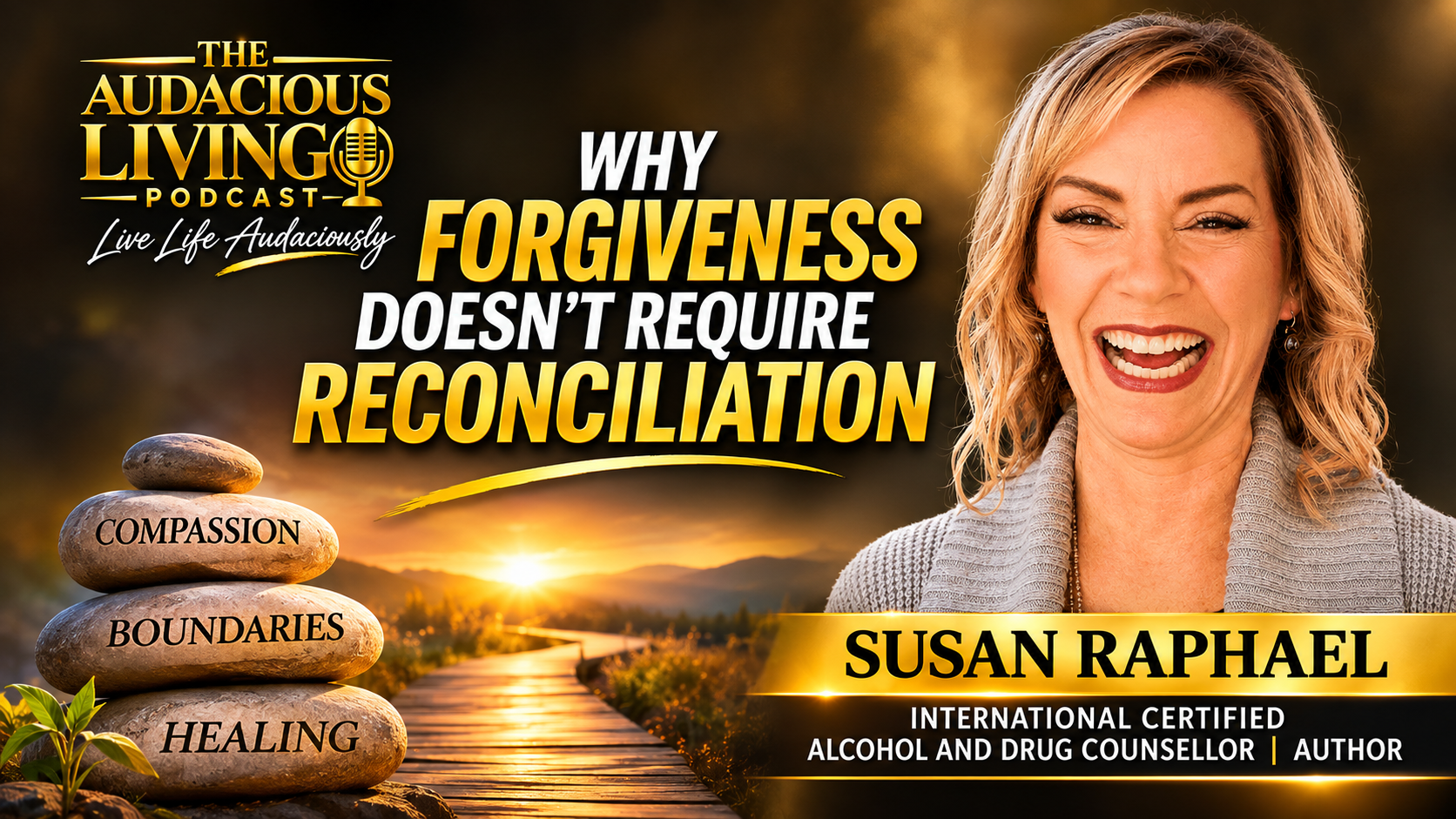
“We can be compassionate and hold healthy limits and healthy boundaries.”
Susan Raphael
International Certified Alcohol and Drug Counsellor | Author
Can you forgive someone who has hurt you without welcoming them back into your life? In this thoughtful conversation, addiction counsellor and author Susan Raphael explores why compassion, forgiveness and healthy boundaries can coexist, even when trust has been broken.
Episode Summary
Forgiveness is often presented as a simple choice: let go of the hurt, make peace and move forward. But what happens when the person you are trying to forgive is someone you love, especially when addiction has made the relationship painful and unpredictable?
In this episode of The Audacious Living Podcast's The Audacity to Forgive series, Susan Raphael returns to share the deeply personal experience behind her contribution to the anthology When We Forgive. Her chapter, As We Forgive Those Who Trespass Against Us, explores loving someone whose addiction continued while she was finding her own path in recovery.
Susan describes the difficult decision to leave a chaotic relationship, the resentment that lingered afterward and the unexpected compassion she experienced when she later witnessed that person's suffering. What emerged was an important realization: forgiveness does not necessarily restore trust, require reconciliation or mean forgetting what happened.
Together, Audley and Susan explore how addiction affects entire families, why shame and resentment can interfere with healing, and how self-forgiveness creates room for personal growth.
Their conversation offers a compassionate perspective on a complicated subject. Healing does not always follow a straight line, and moving forward does not require every emotional question to be resolved first.
Sometimes, the most audacious choice is to care about another person's well-being while taking responsibility for your own.
Key Takeaways
Forgiveness does not require reconciliation. You can release resentment and feel compassion for someone without rebuilding a relationship or restoring trust. Forgiveness and closeness are separate choices.
Healthy boundaries are an expression of self-respect. Caring about someone struggling with addiction does not mean accepting harmful behaviour. Sometimes compassion requires distance, especially when a relationship threatens your well-being.
Healing is a process, not a deadline. Forgiveness may develop through reflection, personal growth and unexpected moments of clarity. You can continue living your life while still working through difficult emotions.
Self-forgiveness creates room for growth. Mistakes, setbacks and shame can keep us focused on what has gone wrong. Treating failure as feedback and practising self-compassion can help us move forward with greater understanding.
Meet the Guest
Susan Raphael is an addiction counsellor, author and founder of Sustainable Recovery. Her work focuses on supporting people affected by addiction, including individuals in recovery and families navigating the emotional challenges that addiction can create.
Drawing on her professional experience and personal recovery journey, Susan brings a compassionate perspective to relationships, healing, accountability and personal growth.
She is also the author of What's Wrong with My Teen?, a resource connected to the challenges families face around teen mental health and addiction.
Susan contributes the chapter As We Forgive Those Who Trespass Against Us to the anthology When We Forgive, sharing a personal story about letting go of a painful relationship, discovering compassion and recognizing that forgiveness does not have to mean returning to the past.
Audacious Insight
Blog Title: The Audacity to Forgive Without Letting Someone Back In
Summary: Its possible to forgive someone, wish them well and still choose a different path. Sometimes, living audaciously means having the courage to let go without losing your compassion.
Special Offer
Explore When We Forgive
Susan is one of 15 contributing authors in When We Forgive, an anthology exploring personal experiences of forgiveness.
Her chapter, As We Forgive Those Who Trespass Against Us, examines the difficult relationship between love, addiction, resentment and compassion.
Audley's Personal Insight
One of the things that really struck me during my conversation with Susan was how much more complicated forgiveness becomes when addiction is involved.
We often think about forgiveness in terms of someone doing something to hurt us. But addiction introduces another layer. There is the individual, the illness, the behaviour and the impact on everyone who cares about that person. Susan helped me appreciate why compassion matters so much in navigating those distinctions.
I also kept coming back to something we discussed about healing being a process. We don't have to complete every step perfectly before moving forward with our lives. There may be setbacks, difficult emotions and lessons we haven't fully understood yet.
For me, that's an important part of living audaciously. We can acknowledge the hurt, learn from the experience, establish boundaries and still choose to move forward.
Forgiveness doesn't have to mean going back. Sometimes it means giving ourselves permission to keep growing.

Never miss a conversation. Follow The Audacious Living Podcast on your preferred listening platform:
Rate the Podcast
Enjoying The Audacious Living Podcast?
Take a moment to rate and review the show on your favourite podcast platform. Your feedback helps more people discover these conversations and join a community committed to living life audaciously.
#AudaciousLiving #TheAudaciousLivingPodcast #LiveLifeAudaciously #SusanRaphael #TheAudacityToForgive #WhenWeForgive #Forgiveness #ForgivenessJourney #HealthyBoundaries #AddictionRecovery #Compassion #SelfForgiveness #EmotionalHealing #Resilience #PersonalGrowth