
Identity After Incarceration: Rebuilding the Self with Ronald “Zion” Roseboro
Introduction
There are moments in life when a person realizes they are no longer who they used to be—but they are not yet sure who they are becoming. For many men, incarceration is one of those moments. It interrupts life, reshapes perception, and often leaves behind a question that lingers long after release: Who am I now?
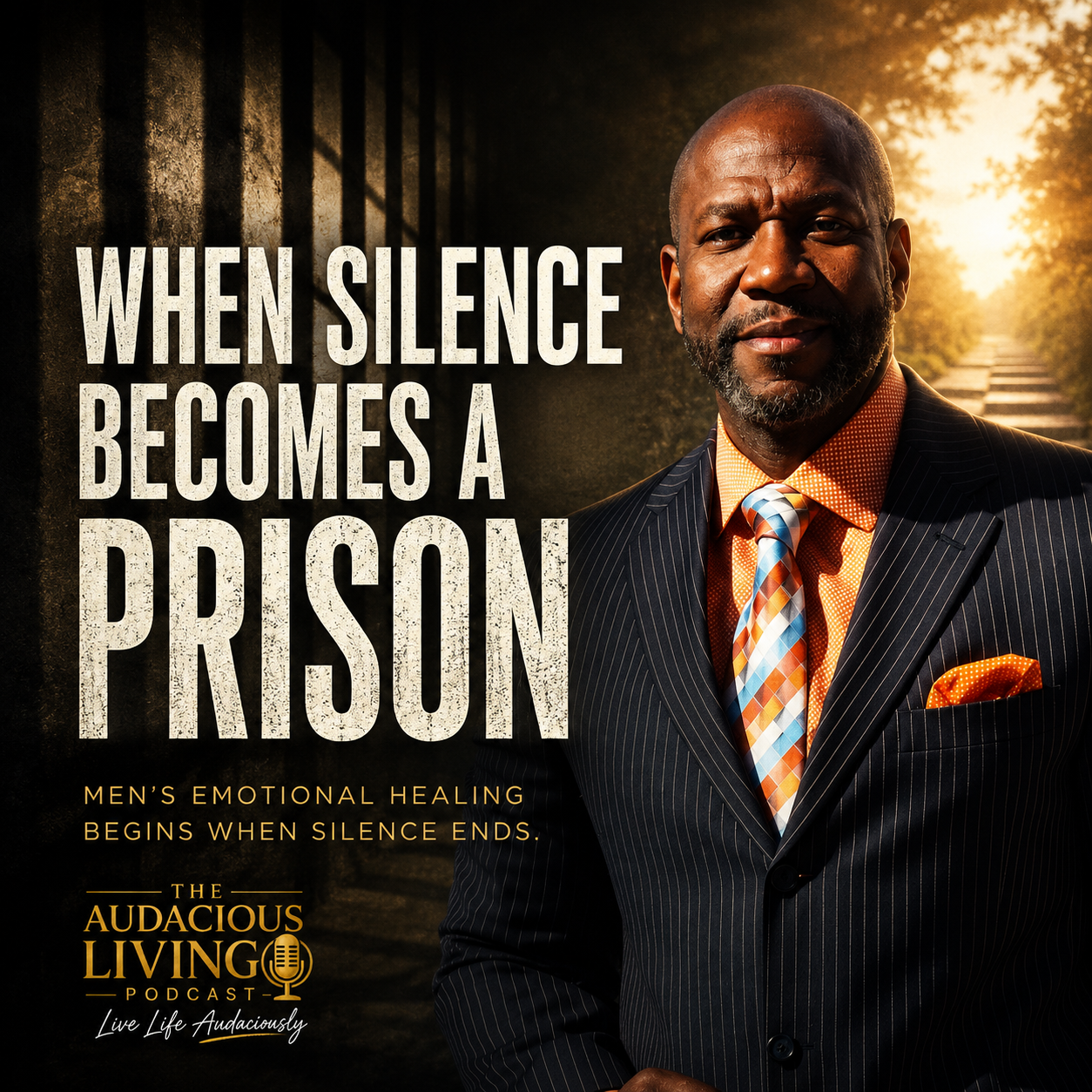
That question sits at the heart of this conversation with Ronald “Zion” Roseboro, a trauma-informed coach and founder of the Samson Restored movement, whose work focuses on helping men rebuild identity after incarceration and trauma.
Why This Conversation Matters
Identity after incarceration is not just a philosophical idea—it is a lived reality that affects how men re-enter relationships, work, and community. The challenge is that many people assume the hardest part of incarceration is the time served, when in truth, the deeper struggle often begins after release.
What makes this topic so important is how easily identity becomes fused with experience. A label can begin to replace a person’s sense of self. Over time, “what happened” can quietly become “who I am.” That shift is subtle, but powerful—and it shapes decisions, confidence, and direction long after the original experience has passed.
Zion’s perspective challenges that assumption. He reminds us that while we cannot always control what happens to us, we are not meant to remain defined by it. The real work begins when a person starts to separate their identity from their history.
When Experience Becomes a Label
One of the most difficult transitions after incarceration is not logistical—it is internal. It is the moment a man begins to see himself through the lens of his past rather than his potential.
Zion speaks to this tension with clarity. He describes how easy it is for a single chapter of life to become the dominant story someone tells themselves. When that happens, the label becomes heavier than the person carrying it. It influences how they walk into rooms, how they speak about themselves, and what they believe they are allowed to pursue.
This is not about denying the past. It is about refusing to let the past become the full definition of identity. The distinction matters because identity shapes behaviour. When a man believes he is only his worst moment, his choices begin to reflect that belief.
The Moment Responsibility Returns
A key turning point in Zion’s message is the idea that healing begins when responsibility is reintroduced—not as blame, but as agency.
There is a difference between acknowledging what happened and surrendering to it. Zion emphasizes that while no one is responsible for every circumstance they face, there comes a moment when responsibility for what happens next returns to the individual.
That shift is subtle but powerful. It moves a person from passive survival into active rebuilding. It is not about ignoring pain or minimizing trauma. It is about recognizing that even after disruption, there is still a next step that belongs to you.
This is where identity begins to loosen from circumstance. Not through force, but through awareness.
Rebuilding Identity Requires Structure, Not Just Intention
One of the most practical insights from Zion’s work is that transformation does not happen through motivation alone. Motivation may spark change, but it rarely sustains it.
He introduces the BRICK Method as a way of understanding this process—Breakthrough, Resilience, Identity, Clarity, and Kickstart. The idea is simple but profound: rebuilding a life is not one leap forward, but a series of intentional steps that create stability over time.
This matters because many people try to “start over” all at once. When that approach fails, they often interpret it as personal failure rather than a lack of structure. Zion reframes this by suggesting that identity is rebuilt piece by piece, not in a single moment of reinvention.
Structure creates consistency. Consistency creates confidence. And confidence slowly reshapes identity.
Community as a Mirror for Identity
No one rebuilds identity in isolation. One of the most overlooked aspects of transformation is the environment in which it takes place.
Zion highlights the importance of community spaces like Samson Restored, where men are not only heard but seen differently. In these environments, old narratives are not reinforced—they are challenged. A man is not reduced to his past, but reflected back to himself with possibility.
This matters because identity is often shaped in relationship. When someone is only ever seen through a single lens, it becomes difficult to imagine anything beyond it. But in safe, supportive communities, new reflections begin to form. And over time, those reflections begin to feel more true than the old story.
Lessons for Living Audaciously
Living audaciously in the context of identity after incarceration is not about erasing the past—it is about refusing to be confined by it. It requires the courage to separate who you are from what you have experienced, even when the world tries to merge the two.
Zion’s journey reminds us that rebuilding identity is not a dramatic reinvention. It is a steady return to self through structure, reflection, and support. It asks a simple but difficult question: What becomes possible when I stop defining myself by what happened to me?
The shift begins when a person recognizes that their next chapter is still unwritten—and that they are still the one holding the pen.
Conclusion & Call to Action
Identity after incarceration is not a fixed outcome—it is an ongoing process of rebuilding, reflection, and choice. Ronald “Zion” Roseboro’s story offers a grounded reminder that what happens to us does not have to determine who we become.
If this conversation resonated with you, I invite you to listen to the full episode of The Audacious Living Podcast, subscribe for more conversations like this, and share it with someone who may need the reminder that their story is not finished yet.
